Il percorso raro e straordinario di Avery: un viaggio diagnostico unico su un milione
Caitlin Eppes condivide la storia ispiratrice del Progetto Avery, un'iniziativa che prende il nome da sua figlia e che è dedicata alla ricerca sulla sua rara variante genetica.

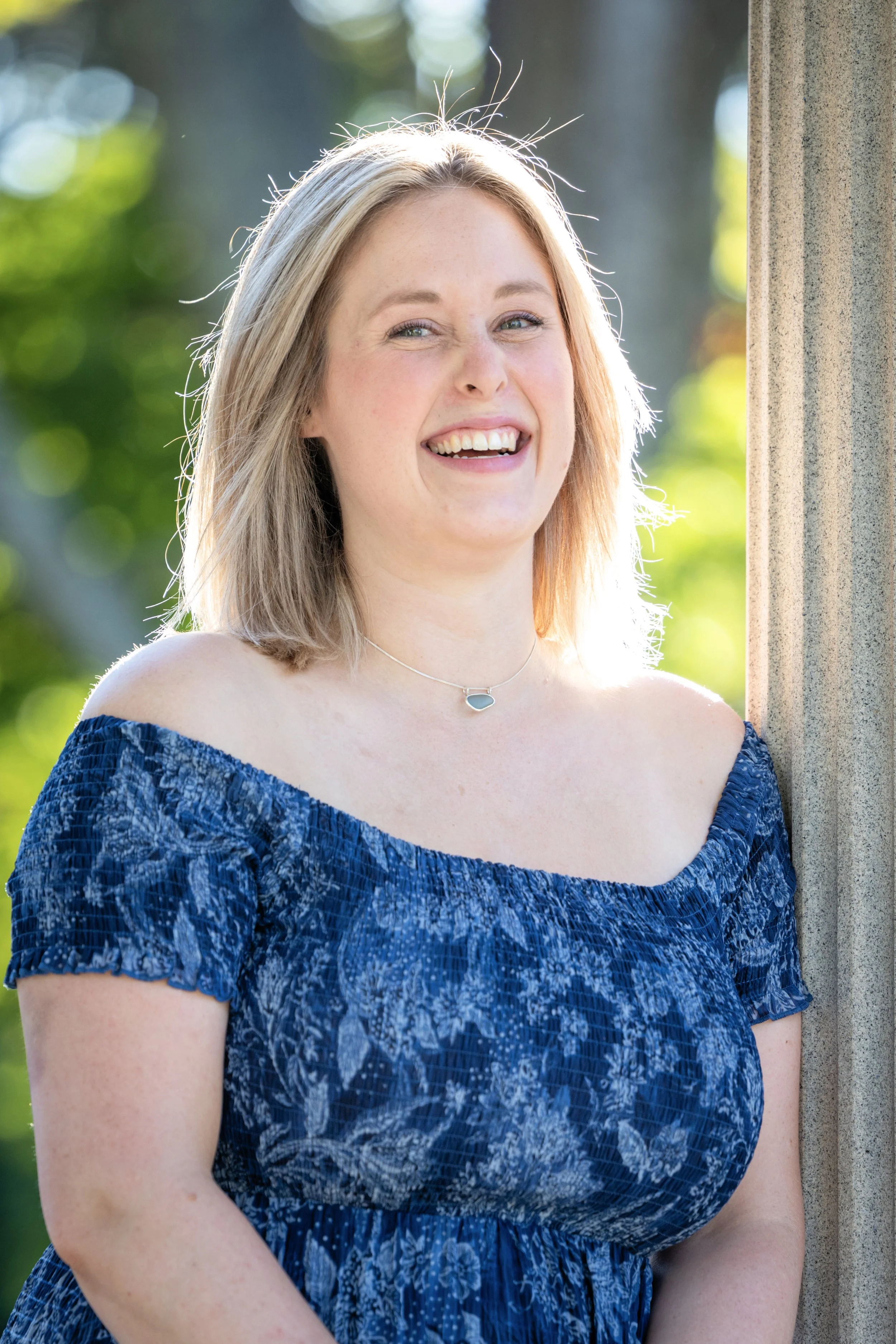
Caitlin Eppes (left), rare mother, with her daughter Avery (right).
In August 2017, Caitlin Eppes and her husband, Trey, welcomed their second child, Avery. Shortly afterward, what initially seemed like harmless birthmarks on Avery’s skin became the first indicators of a complex medical journey. Following an initial diagnosis of a port wine stain, Avery's symptoms prompted genetic testing. What was ultimately revealed was an exceedingly rare variant that left her family in a realm of uncertainty, until a fortuitous meeting with a neurologist changed the course of their future. What the Eppes family never expected was a one-in-a-million breakthrough: finding another child with the same extremely rare variant—also, incredibly, named Avery. Their path, defined by persistence, resilience, and a small yet incredibly valuable team of specialists and other ultra-rare patients, gave rise to The Avery Project—a symbol of hope and a catalyst for pioneering research into rare diseases. Avery’s mother Caitlin Eppes spoke to Know Rare about the remarkable twists and turns of Avery’s diagnostic story and the incredible odds that they managed to defy to lead them to a breakthrough in her case.
Know Rare: come è iniziato il percorso diagnostico di Avery?
Caitlin: Avery was born on August 18th, 2017. She's my second child—her brother Charlie is eight and a half years old. My pregnancy with Avery was pretty uneventful, but after she was born, she had what I thought were stork bites: right on the front of her forehead, on her left eye, on the back of her head, and on the nape of her neck. I didn't really think anything of it at the time—Charlie had some of those when he was born, too. But during our two-week well visit, her pediatrician said, “I think these are getting darker—I want you to go see a dermatologist.” She knew me well, and she said, “I'm not going to explain why just yet. I want to see what their thoughts are without you getting too nervous.”
The dermatologist ended up diagnosing her with a port wine stain. In some other patients, those appear on one half of the face, but Avery’s was what they called a center-line vascular anomaly. After about a month of going down this diagnosis path, I was like, “What's happening? Why are we going to so many specialists?” We ended up going to a neurologist at Boston Children's Hospital who specializes in diseases related to port wine stains. That neurologist believed she may have had a condition called macrocephaly capillary malformation, but said, “Her symptoms aren't fitting into the criteria that we look for.” As time went on, Avery was very floppy and very stiff, and we realized she was delayed. She never crawled, she never walked. She was able to sit up at about 12 months, but at 15 months, she lost that ability—she would spring backward crying, almost like she was in pain.
At that point, everyone started paying attention. We were sent to geneticists who recommended whole exome testing. The results came back with one variant of a gene called SPTSSA. They told us that it was “a variant of uncertain significance.” It hadn’t been reported before—they didn’t have any other people on record who had it. There was no research on that variant, and there was minimal research on the gene itself. The geneticist left us with, “Wait five years—let's see if there's any new information that comes out, and we'll check back.”
KR: Come si sentiva a quel punto, di fronte a tanta incertezza?

Avery, in a gait trainer
Caitlin: It was super scary and lonely. We'd been waiting for so long. I realized that many other families are not as lucky as we were, to even get an answer that quickly, but it still felt like a really long time for us. And to hear that she was the only one was just terrifying. I'd done enough research to start to understand this world of rare diseases. I realized that children are not always lucky enough to be able to wait five years. So that also terrified me—thinking, what if we don't find anything out before something happens to her? I started scouring Google Scholar—I’d be up at midnight with all these tabs open, researching related diseases to try to understand and learn as much as I could.
I reached out to people via support groups, podcasts—anything I could think of—about how they got their gene research started. But it felt like they all already had communities for their specific diseases, and we didn't even know if her variant was the cause of her disease. So it felt like we were starting really far behind everyone else that I spoke to.
KR: Qual è stato il primo passo avanti nel conoscere meglio la condizione di Avery?
Caitlin: Eravamo a una visita fisiatrica per parlare della rigidità delle gambe. L'appuntamento era con un nuovo fisiatra del Massachusetts General Hospital e lui mi disse: "Ho guardato i suoi risultati genetici prima di questo. C'è un neurologo al MGH che ha studiato questa via metabolica per molto tempo. Penso che dovresti incontrarlo".
He made the introduction to that neurologist, who was named Dr. Florian Eichler. By the time I walked into his office, he'd had his molecular geneticists model the variant in yeast which showed that the variant was causing Avery to overproduce Sphingolipids. That was the first time someone had been able to tell me that. We discussed how to obtain federal grants and he explained that we had to first generate insights and de-risk the effort a bit. So, it was clear that the research had to be privately funded to get enough insights in order to get the NIH comfortable with giving a federal grant, especially since there was only one child with the variant. He told me that we needed mouse models and that we were going to need a researcher's time. We settled on a plan that involved paying for the genetically altered mice and one-third of a postdoctorate's time, with the goal of getting some initial insights into the genetics and scaling up from there.
Una delle cose che abbiamo deciso è stata: non aspettiamo di dimostrare che la variante è la causa del problema prima di iniziare a cercare un trattamento. Cerchiamo di fare entrambe le cose contemporaneamente. I nostri obiettivi fin dall'inizio erano: dimostrare che la variante è la causa dei suoi problemi, sviluppare alternative per un trattamento (abbiamo perseguito la terapia genica e l'editing genetico), fare entrambe le cose allo stesso tempo e cercare di andare avanti il più velocemente possibile. Questo è stato l'inizio del Progetto Avery.
KR: What was it like to be suddenly thrown into a position where you had to understand all of this advanced scientific information?
Caitlin: I still struggle with it, honestly. For work, I used to do a lot of project management, so I would have to talk to teams and glean the requirements for different projects. You learn just enough to be able to ask the right questions and understand what certain words mean to each of those teams. That helped in a scientific context as well. Plus, you learn everything better when it's relevant to your interests. Since it was related to Avery, it just clicked more easily. I recently took a genetics class through the Harvard Medical School extension program, which was super helpful. Things make a lot more sense when I read research now—I understand more elements. I plan on taking a gene therapy class so that when we successfully develop a gene therapy treatment I am able to really understand how it works, and the risks involved. I still can’t do any of the science, but now I can listen to the science and understand it more.
“Tell your story—repeat it, and don’t be afraid to ask the same question over and over and over again.”
KR: Come ha scoperto l'altra Avery?
Caitlin: We put Avery’s variant into a global database called Gene Matcher. It's used by physicians to find other physicians who are interested in the same gene or variant and to be able to connect their research. We said we wanted to be matched with anyone who has a variant within the gene—it didn't need to be the same variant.
In June of 2020, I was at a little outdoor gathering with some friends. It started storming, so we ducked inside—when we came back out, there was a double rainbow. It was absolutely gorgeous. When I left, I looked at my phone and I had a call from Dr. Eichler, a call from one of the doctors at Boston Children's, and a call from Avery's geneticist. It was one of those moments where your heart just stops because you're like, this is either great news or terrible news—and either one is nerve-wracking. I called back the next morning, and Dr. Eichler said, “We found another person with the same variant. Because of HIPAA, we can't give you their information. They have your information and we hope they call you.” So then we had to just wait for them to reach out. I remember him saying, “Nature's whispering to us.”
Qualche settimana dopo, mentre mettevo a letto i bambini, ricevetti un messaggio vocale da un numero che non conoscevo. Quando ho ascoltato il messaggio, una donna mi ha detto: "Ciao, sono Corey. Ho saputo dalla Rete delle malattie non diagnosticate che nostra figlia Avery ha la stessa variante di vostro figlio".

Avery (left) and Charlie (right), siblings
I was floored. And I knew that Corey knew very little about us, just like I knew very little about her. I frantically called her back and said, “I can't believe this, but our daughter’s also named Avery.” At that time, the other Avery was nine. They’d had a nine-year diagnosis journey, and done whole exome testing four times, which is why I also view this as a miracle—I think most families really only do it once. [During their diagnosis experience], the UDN had said, “This is a variant of uncertain significance. Usually, we would ignore this, but there’s another child out there with the same variant and similar symptoms.”
Finalmente avevamo una piccola comunità. Avevamo già avviato il Progetto Avery e il caso ha voluto che anche il secondo figlio si chiamasse Avery, il che ha reso il tutto ancora più potente e sorprendente.
KR: Che tipo di ricerca ha potuto intraprendere il Progetto Avery?
Caitlin: Over the past three years since we got started, the team has gained an incredible understanding of the impact of the variant on gene function and symptom implications. They’ve pursued gene editing and have been able to build vectors for gene therapy, and they were working on administering the vectors for the gene therapy to mice. Basically—and this is where my gene therapy class will come in handy—the perspective is that over-expressing properly functioning versions of the gene will override the bad-functioning gene, and bring Sphingolipid levels back to normal.
They also found a third person in 2021 who had a different variant in the same gene. Our doctors have collaborated with him, and as a result of the insights of the three patients and all of their work, they were able to publish the first paper on the variants in Brain Journal—which is one of the top neurological journals— in January.
È davvero emozionante poter dire che in quattro anni, durante i quali si è verificata una pandemia globale, siamo riusciti a definire la variazione funzionale del gene, i sintomi associati, a classificare i sintomi con una malattia (paraplegia spastica ereditaria complessa) e a pubblicare il primo manoscritto sulla variante genetica in una rinomata rivista medica - e non solo un articolo generalizzato, ma uno che riguarda effettivamente la nostra bambina e ciò che sta vivendo.
Now we can work on changing the designation of the variant from “variant of uncertain significance” to “pathogenic.” The team is working to submit the necessary data to make that happen. If it changes designation, then that’s also a chance for doctors with patients who might have this variant to be re-contacted and told that their patient has a change to their diagnosis.
Ora che quell'articolo è stato pubblicato, ho notato che viene citato in altre ricerche. Ritengo che sia un trampolino di lancio straordinario per la scienza legata a questa variante, che sia o meno frutto del Progetto Avery. Fa capire che se ci si mette d'impegno, si può fare.
“My goal for Avery is just for her to live the happiest, most independent life she can, in the way that she wants.”
KR: Può parlarci di Avery?

The Eppes family
Caitlin: Avery ha sei anni. Ha lunghi capelli rossi, che adora. Usa una sedia a rotelle manuale e si agita su di essa quando vuole cantare e ballare: fa sempre le piroette nella nostra cucina. È ossessionata dal fratello maggiore. E adora la scuola. Frequenta l'asilo nella scuola pubblica della nostra città e i suoi compagni sono incredibili con lei. Le tengono la mano mentre si rotola o le chiedono di spingerla, vengono a casa nostra e si truccano a vicenda. Ha un senso dell'umorismo esilarante ma a volte anche molto cupo. Adora tutti i cattivi della Disney e quando fa finta di essere una principessa finisce con l'essere legata dai cattivi: sceglie sempre la via più oscura! È uno spasso.
In many ways, she’s a very typical six-year-old girl. I think sometimes when I say, “I have a disabled child,” people don't expect her when she rolls up next to me. Whenever she sees other people in wheelchairs, she says, “They're in a wheelchair like me!” And she'll zip right up to them and say, “I like your wheelchair.” She's so proud of who she is. My goal is just for her to live the happiest, most independent life she can, in the way that she wants.
KR: Sembra una bambina incredibile. Ha qualche consiglio da dare ad altri genitori che devono affrontare le prime fasi della diagnosi di una malattia rara?
Caitlin: I would say three things: 1) get genetic testing; 2) ask lots of questions; and 3) stay organized.
Per quanto riguarda i test, se sembra che ci sia confusione in merito alla diagnosi e non si è ancora arrivati al test genetico, è bene farlo il prima possibile. Anche se i risultati non mostrano varianti, anche questa è una risposta. E la scienza cambia ogni giorno, per cui si può imparare sempre di più.
If there is a genetic component, I’d ask about whether there are any registries you should be joining. It’s also worthwhile asking if there are any research efforts related to symptoms that may be good to get involved in. There was about a year between when our first neurologist at Boston Children's entered Avery’s genetic variant into GeneMatcher and when her geneticist discussed it with us. So ask these questions of everyone—not just your geneticist. There are all sorts of initiatives out there and you never know where a great referral will come from.
There is so much happening in the rare disease space related to awareness, data collection, and research. There are a lot of ways to educate yourself about symptoms, diseases, treatments, and therapies that enable you to ask more questions of your providers. Honestly, I find Instagram to be incredibly helpful—you can search hashtags related to symptoms or genes. I try to tag a lot of our stories with the names of our genes and related symptoms. One thing Massachusetts General Hospital told me when we started this was that parents in our situation are the most likely ones to be the first to reach out to other families, versus the doctors. Parents will often do loads of research. That's also why Know Rare exists.
Finally, I know it’s the last thing you want to do after emotionally draining appointments but stay organized. Take notes, save appointment summaries and phone numbers, etc. You won’t remember everything. When we were on our diagnosis journey, I had a spreadsheet for every appointment with the key takeaways. I had a column where I would note if what I was hearing at that appointment matched with the commentary from other appointments. It helped me to be able to say, “OK, this contradicts with this,” or ” This aligns with that” — and it more easily highlighted areas of confusion or consensus. It was also extremely helpful to be able to bring that printed spreadsheet to a doctor’s appointment and say, “Here's what every other doctor said that you probably won’t gather from her massive chart. These are my key takeaways based on the conversations I’ve had and what I know.”
It's a lot more organization and advocacy than I realized, and I had to play catch-up in that regard. In the beginning, we were getting a lot of insights that I wasn't properly tracking. Excel is my comfort zone, so I found that keeping track that way made me feel comfortable and organized, and it just made the process a lot easier. More recently though, a rare disease dad launched an amazing website to assist with this that I use for Avery and my son Charlie called Mejo. That’s my go-to now, instead of Excel.
L'organizzazione delle informazioni rende più facile l'advocacy e, come sono certa che ogni lettore sa per esperienza, a volte si tratta solo di perseverare. È davvero difficile, anche in un'istituzione così straordinaria, fare affidamento sul fatto che i medici sappiano tutto ciò su cui altri medici e istituzioni stanno lavorando. Quindi, in breve, direi di raccontare la propria storia, di ripeterla e di non aver paura di porre le stesse domande più e più volte.
To find out more about The Avery Project and how to support it, visit TheAveryProject.com.
To learn more about genetic testing, visit Know Rare’s blog.